Physical Address
304 North Cardinal St.
Dorchester Center, MA 02124
Physical Address
304 North Cardinal St.
Dorchester Center, MA 02124


Counterparty risk explained for crypto users before they deposit, trade, lend, or chase yield.
Counterparty risk is the chance that a person, platform, issuer, custodian, or protocol you rely on fails to deliver what it owes.
In crypto, that can look like frozen withdrawals, a broken stablecoin redemption, a wrapped token with weak backing, a lending platform that cannot return deposits, or a trading venue that does not settle cleanly.
Crypto reduces some trust problems. But every time you trade convenience, yield, speed, or custody support for someone else’s obligation, you take some form of counterparty risk.
Counterparty risk in crypto is the risk that a party between you and your assets does not do the job you depend on it to do. That counterparty can be an exchange, custodian, issuer, lender, OTC desk, wrapped-asset operator, or protocol dependency.
In plain English, counterparty risk starts when crypto stops being only an asset you control and becomes a claim someone else must honor. The claim may be immediate, like an exchange withdrawal. It may also be delayed, like a lender returning deposited stablecoins after a yield product ends.
The cleanest example is an exchange balance. If you buy bitcoin on an exchange and leave it there, you may see BTC in your account. But you do not directly control the coins onchain. You hold a platform claim that depends on withdrawals, custody practices, internal controls, and legal terms.
Before trusting the balance, ask three questions:
Self-custody changes that relationship. If you hold bitcoin directly in your own wallet, the exchange is no longer the custodian. But now your own key management, backups, device security, and signing habits become the weak points.
The risk sits in the obligation. If the other side cannot or will not deliver, a confirmed deposit history does not help much. You still need access to the asset, the redemption path, or the settlement you were promised.
The next step is to separate counterparty risk from market risk, liquidity risk, smart contract risk, and self-custody risk. Those risks can overlap in ugly ways, but they are not the same problem.
Counterparty risk can hurt while market prices look fine because the failure is in the promise, not always in the asset. Your BTC, ETH, or stablecoin may still trade near the expected price while your specific claim is frozen, delayed, haircut, or trapped inside a legal process.
A portfolio screen can lie by omission. It may show a dollar value, a coin balance, or a stablecoin amount. It may not show whether withdrawals still work, whether assets are segregated, whether a lender reused deposits, or whether an issuer can handle redemptions under pressure.
Common failure modes are familiar:
None of those starts as a normal price chart problem. They start as “the other side did not deliver.” Price may follow later, but the user’s first pain is access.
Crypto makes the access problem sharper than many traditional accounts. Markets run around the clock, tokens move quickly across venues, and the legal treatment of a claim may be less clear than a beginner expects.
If you need funds during market stress, waiting for a support ticket is not a risk-management plan. It is a group chat with worse formatting.
Counterparty risk is one risk type among several, and mixing them together leads to bad choices. A user can avoid one problem while walking straight into another.
Before choosing a wallet, exchange, stablecoin, lender, or DeFi product, separate what can fail:
| Risk type | What can fail and what to check |
|---|---|
| Counterparty risk | A platform, issuer, custodian, desk, borrower, or wrapper fails to deliver what it owes. Check who controls assets, what terms apply, and whether withdrawals work. |
| Market risk | The asset price moves against you. Check position size, volatility, and whether you can tolerate the loss. |
| Liquidity risk | You cannot exit at a fair price or at the time you need. Check market depth, pool depth, redemption paths, and exit windows. |
| Smart contract risk | Code, permissions, upgrades, or protocol design fail. Check audits, admin keys, bug history, and what assets the contract controls. |
| Self-custody risk | You lose keys, sign a bad transaction, fall for phishing, or mishandle backups. Check wallet setup, recovery plans, and signing hygiene. |
These risks often arrive together. A stablecoin lender may carry issuer risk, borrower risk, liquidity risk, and platform risk. A wrapped token may carry bridge risk, custodian risk, smart contract risk, and liquidity risk. If there are buyers but you cannot exit without moving the price hard, that is exit liquidity.
If someone owes you assets and cannot return them, that is counterparty risk. Start by naming the actual failure path. Otherwise every warning becomes the same foggy “be careful,” which is true, useless, and somehow still too optimistic.
Counterparty risk hides anywhere a crypto asset becomes a claim on another party, system, or dependency layer. The same coin can carry different risk depending on where you hold it and what you are using it for.
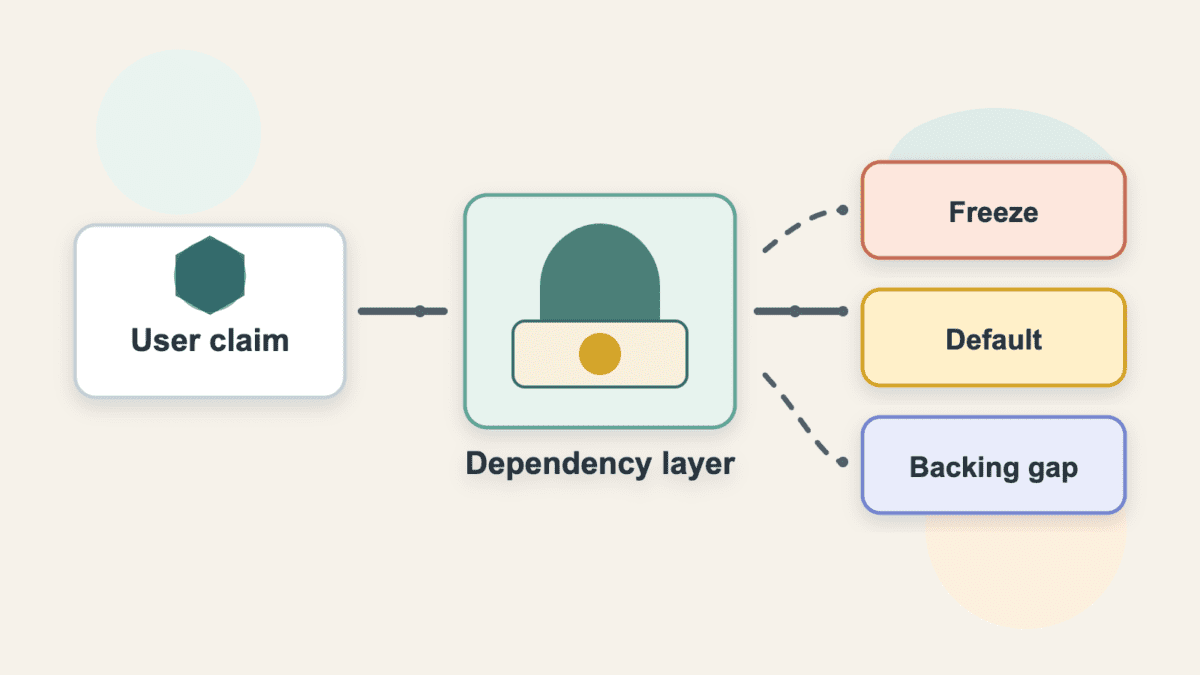
The map is not meant to scare users away from every service. It shows where to ask better questions. Who has the keys? Who maintains the contract? Who backs the token? Who owes settlement? Who can freeze, pause, upgrade, delay, or default?
Centralized exchanges and custodians create counterparty risk because they hold assets or control withdrawal access for users. You may have an account balance, but the platform controls the operational path between that balance and your own wallet.
The risk is not only “the exchange gets hacked.” It can also be insolvency, weak segregation of customer assets, internal misuse, account freezes, withdrawal queues, unclear legal terms, or business continuity failures.
Before keeping meaningful funds on a platform, users should check the boring details:
Opaque counterparties deserve extra caution. If a venue or product looks like a clean financial service but behaves like a hard rug, the issue is no longer just risk. It may be a promise designed to fail.
Stablecoins create counterparty risk because the token usually depends on an issuer, reserve assets, reserve custodians, redemption terms, and market confidence. The token may move onchain like crypto, but its value often rests on offchain promises.
Stablecoins are not automatically bad because they have issuers. Users still need to know what stands behind the token. A stablecoin can have issuer risk, bank risk, legal risk, freeze risk, chain-specific liquidity risk, and DeFi pool risk at the same time.
The first checks are direct:
After those three checks, ask how you exit. Redemption through the issuer may differ from selling into a DeFi pool or exchange order book. A token can appear liquid on a normal day and still become harder to exit during stress.
Stablecoins also get wrapped into other products. A yield vault, lending pool, payment app, or synthetic stablecoin can add new counterparties on top of the issuer. The stablecoin may be only the first layer of trust.
Wrapped assets add counterparty risk because the token you hold is a representation of something else. A wrapped bitcoin token on another chain is not the same as holding bitcoin directly on Bitcoin’s base chain.
The user depends on the wrapper design. That can include a custodian, merchant network, bridge contract, proof of backing, redemption process, and liquidity route. If any of those breaks, the wrapped token can trade differently from the asset it represents.
For wrapped assets, the important checks are narrow:
Together, those answers define the exit path. What proves the asset is backed? Who controls the underlying collateral? How can users redeem? What happens if the bridge pauses, the custodian fails, or liquidity dries up?
Wrapped assets are useful because they let capital move into more places. But a wrapped token is a claim, not a magic teleport. The risk sits in the machinery between the original asset and the version you are holding.
DeFi can reduce one kind of counterparty risk by removing a centralized company balance sheet from the custody path. But it can replace that dependency with code, oracles, governance, bridges, admin keys, liquidity, and token incentives.
That trade deserves attention, not slogans. A lending protocol may be non-custodial, yet still depend on price feeds, liquidation logic, collateral rules, emergency controls, and governance upgrades. A DEX pool may not owe you funds like a company, but it can expose you to smart contract failure or thin liquidity.
The dependency list can include:
The useful distinction is “who can fail” versus “what can fail.” In DeFi, the failing party may not be a legal counterparty. It may be a contract, oracle, bridge, or governance process. The result can still feel the same to the user: funds stuck, losses realized, or an exit route gone.
So “no counterparty” is too neat. “Different dependencies” is more honest.
Derivatives venues and OTC desks add counterparty risk because trades can depend on margin systems, venue solvency, settlement timing, collateral movement, and operational accuracy. The larger or faster the trade, the less room there is for vague trust.
A trader may keep funds on a venue to post margin. That creates venue exposure. A desk may quote a trade that settles later. That creates delivery risk. An address-update mistake, delayed transfer, or margin-system failure can turn a clean trade idea into an operational problem.
Active traders should check:
Derivatives can sometimes reduce the amount of capital kept on a venue, because traders may gain exposure without parking the full notional amount there. But that does not remove venue risk. It changes its size, timing, and failure path.
The habit that helps is simple: keep only the capital needed for the active purpose, know the settlement process before sizing up, and handle address changes like high-risk events.
In crypto, a bad settlement process can be the most expensive admin task you never meant to do.
Self-custody can remove custodial counterparty risk for assets you hold directly onchain. If you control the private keys and the asset is native to that chain, you are not waiting for an exchange or custodian to return it.
That is the strong part of the “not your keys” argument. It is especially clear with bitcoin held in a wallet the user controls. The asset can still move in price, and the network can still have its own risks, but no custodian owes you the coin. The trade is that self-custody moves responsibility onto the user.
The nuance is important. If the wallet holds a wrapped token, stablecoin, LP position, or DeFi receipt token, some counterparty or protocol dependency may still sit inside the asset. Self-custody controls the keys. It does not automatically purify every token you keep there.
Useful self-custody checks include:
The right setup depends on the asset, amount, skill level, and time horizon. CryptoProcent’s wallets guides can help when the next decision is device choice, app choice, or custody workflow.
For larger balances, the workflow carries more weight than the brand name. A good wallet setup still fails if the backup is exposed, the recovery plan is untested, or every signing request gets approved in a hurry.
Self-custody is not a purity badge. It is a control choice. It can reduce reliance on platforms, but it does not forgive sloppy backups, rushed signatures, or blind approvals.
High crypto yield often means higher counterparty risk because the return usually pays you for taking some dependency. That dependency may be a borrower, platform, protocol, issuer, liquidity pool, derivatives venue, incentive program, or hedge.
Sometimes the yield is easy to understand. Borrowers pay to borrow assets. Traders pay funding. Protocols distribute incentives. Market makers need liquidity. But sometimes the yield is a stack of risks wearing a clean APY label.
Before depositing, ask what funds the yield:
If the return looks like magic, the trick is usually in the risk stack. Yield also changes duration risk. A short-term trade on a venue is one dependency for a short time. A deposit in a lending product can become a longer claim on borrowers, collateral, platform solvency, and withdrawal terms.
DeFi yield adds another layer. A yield-farming position may involve contracts, pool depth, incentives, token prices, and governance rules. That can be fine when you understand the stack. It gets dangerous when the only thing you understand is the headline return.
A slightly higher return may not be worth a longer dependency chain, weaker exit route, or opaque borrower book.
Proof of reserves can reduce some information gaps, but it does not remove counterparty risk by itself. It is a transparency signal, not a guarantee that withdrawals will always work.
A reserve report may show assets or backing at a point in time. That can be useful. But users also need to know liabilities, legal claims, asset control, custody quality, governance, off-balance-sheet obligations, and liquidity under stress. Agio Ratings makes that boundary clear, noting that a quarterly attestation can leave a 90-day visibility gap between snapshots.
For a user, the question is not only whether assets are visible. It is whether the platform can honor claims when withdrawals spike, legal claims collide, reserves need to be sold quickly, or governance has to make a hard call.
Here is the plain version:
| Proof-of-reserves signal | What it does not settle |
|---|---|
| Assets may exist at a snapshot time | Whether all customer liabilities are fully covered |
| Wallet balances may be visible | Whether the platform has clean legal control |
| A reserve asset may be named | Whether it can be sold quickly during stress |
| A report may look reassuring | Whether withdrawals, governance, and operations hold up |
The warning is not “ignore proof of reserves.” The warning is “do not stop there.” A reserve page is one clue. It should sit beside withdrawal history, legal terms, asset segregation, liabilities, custody controls, and crisis behavior.
Timing can hide the weak point. A snapshot can look clean while the real weakness sits between snapshots, inside liabilities, or in assets that are hard to liquidate under pressure. Strong counterparty-risk work asks what the report misses.
Proof of reserves works best as a question starter. If a platform treats it as the final answer, that is its own answer.
You reduce counterparty risk by shrinking the number of promises you depend on, limiting how long you depend on them, and checking the promises before money moves. The goal is not paranoia. The goal is fewer surprises.
Use a checklist before depositing, trading, lending, or accepting yield:
| Check | Reason To Check |
|---|---|
| Who controls the keys? | Custody determines whether you own the asset directly or hold a platform claim. |
| Where are assets held? | Segregation, custody partners, and chain choice affect recovery and withdrawals. |
| Can assets be reused? | Rehypothecation and lending permissions can add borrower or platform exposure. |
| What backs the token? | Stablecoins and wrapped assets depend on reserves, custodians, and redemption routes. |
| What funds the yield? | Borrowers, incentives, borrowed exposure, or hedges each create different failure paths. |
| Can withdrawals be tested? | A small test withdrawal shows basic access before position size grows. |
| What happens under stress? | Withdrawal gates, liquidity limits, and support delays usually appear when users most need exits. |
| Who controls upgrades or admin keys? | A small protocol with unknown operators may carry extra trust and governance risk. |
The checklist is not a magic shield. It is a way to slow the click before a deposit. Most bad counterparty decisions feel obvious only after the withdrawal button stops behaving like a button.
Team identity belongs in that check. An anon dev can be normal in crypto, but unknown control becomes more serious when the team can upgrade contracts, pause flows, or move assets.
Sizing changes the answer. A counterparty can be acceptable for a small active balance and unacceptable for long-term savings. A venue can be useful for a trade and still be a poor place to store idle assets. Keep the amount, duration, and dependency count aligned with the benefit you are getting.
Counterparty risk may be worth accepting when the service gives you something you cannot reasonably get alone. Fiat ramps, active trading, tax records, qualified custody, derivatives access, institutional controls, OTC liquidity, and business workflows can all justify limited trust.
The key word is limited. The risk should have a purpose, a size, and an exit plan. Leaving every long-term holding on a venue because it was easy at purchase time is different from keeping a small trading balance there for active orders.
Write down the job before sending funds. If the job is “buy once and hold for years,” a long exchange balance is hard to justify. If the job is “execute orders this week and withdraw leftovers,” the same venue exposure may be a smaller, time-bound trade-off.
Limited counterparty exposure can make sense when:
None of this is permission to trust every service with a polished dashboard. Counterparty risk is not an automatic veto either. Crypto users already accept trade-offs when they choose speed, records, support, liquidity, or yield.
The service has to earn the exposure. Clear terms, tested withdrawals, understandable custody, narrow use, and a defined exit path make the risk easier to defend. Vague promises and sticky balances do the opposite.
The cleaner question is simple: what benefit justifies this dependency, and how quickly can you reduce it when the job is done?
Counterparty risk connects to several nearby crypto terms, but not every adjacent term deserves a detour. The useful ones sharpen the failure path instead of adding glossary noise.
Exit liquidity, anonymous teams, and wrapped assets can still matter in the same conversation. Thin exits can make a counterparty failure worse. An unknown team may be harmless culture or a serious control problem. A wrapped asset may look like the base coin while depending on an extra redemption machine.
The point is to keep the language precise. A fake counterparty may never intend to deliver. A legitimate yield product may still depend on contracts, assets, liquidity, borrowers, and counterparties. Different failure paths need different checks.
Counterparty risk in crypto is the chance that an exchange, issuer, custodian, lender, protocol dependency, or trading party fails to deliver what it owes you. It often appears when you hold a platform balance, use a stablecoin, deposit into yield, trade derivatives, or rely on a wrapped asset.
No. Custody risk is one kind of counterparty risk. It focuses on who controls the private keys or withdrawal path, while counterparty risk also includes issuers, borrowers, desks, wrappers, stablecoin reserves, settlement partners, and other obligations.
Bitcoin held directly in self-custody removes custodial counterparty risk for that BTC. But counterparty risk comes back when bitcoin is held on an exchange, deposited with a lender, wrapped onto another chain, used through a custodian, or accessed through a financial product.
DeFi can reduce company balance-sheet risk because users may interact with contracts instead of a centralized custodian. But code, oracles, admin keys, governance, bridges, collateral rules, and liquidity can still fail. The dependency changes shape.
Yes. Stablecoins can carry issuer risk, reserve risk, bank risk, freeze risk, redemption risk, and chain-specific liquidity risk. A stablecoin is easy to move onchain, but its value can still depend on offchain parties and legal promises.
Proof of reserves can help reduce information gaps, but it is not enough by itself. Users also need to understand liabilities, asset control, legal terms, segregation, governance, liquidity under stress, and whether withdrawals keep working when demand spikes.
Start with the asset path. Write down where the asset sits, who controls it, who can block it, what backs it, and how you exit. If that list gets long, the risk stack is already talking.
Then separate removable dependencies from dependencies you are choosing on purpose. Exchange custody for one trade is different from exchange custody for every long-term holding. A stablecoin used for a short settlement window is different from a yield product that layers issuer, borrower, and withdrawal risk.
Then take practical steps:
Counterparty risk is not a reason to avoid every platform. It is a reason to stop confusing a balance on a screen with an asset you can actually recover.
If any step is vague, lower the size before you raise the trust. Small test withdrawals, shorter holding periods, and fewer stacked dependencies are boring controls. Boring is underrated when the alternative is learning the terms of service during a crisis.
Use counterparties when they solve a real problem. Keep the exposure sized, timed, and understood. The boring version of crypto risk management is still the version that tends to survive contact with the withdrawal button.