Physical Address
304 North Cardinal St.
Dorchester Center, MA 02124
Physical Address
304 North Cardinal St.
Dorchester Center, MA 02124

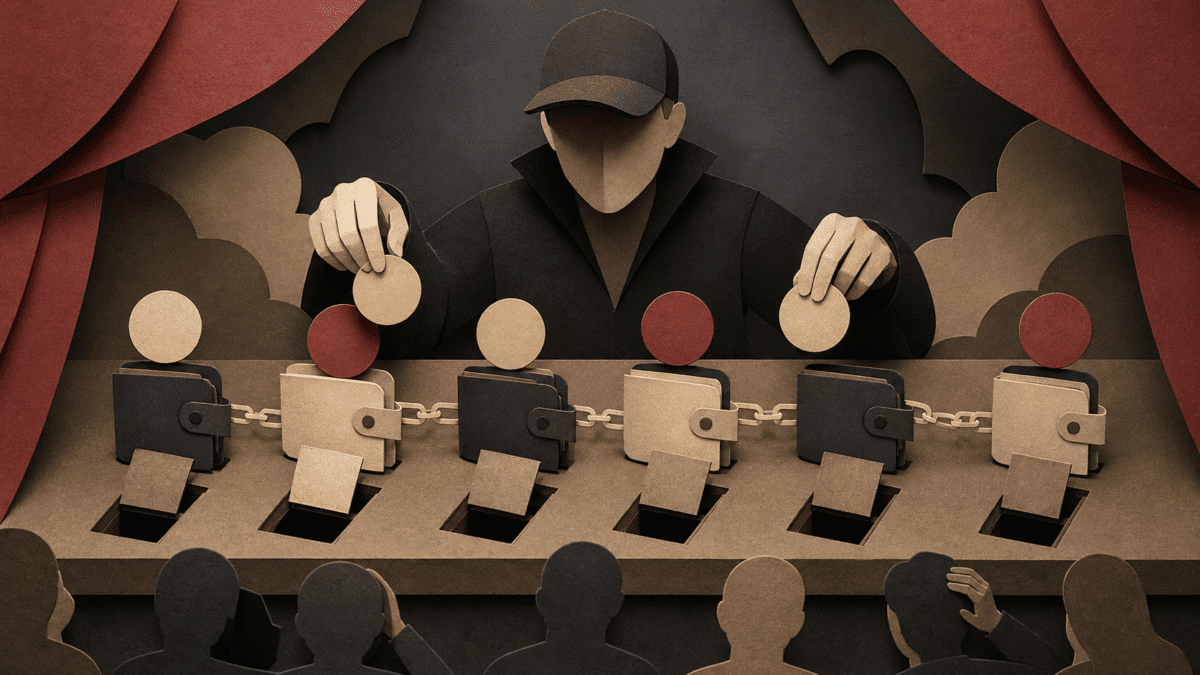
Serial rugger slang, repeat launch patterns, and wallet clues explained in simple, practical steps.
A serial rugger is a crypto deployer, team, or linked wallet group repeatedly tied to token launches that collapse after insiders extract value.
The phrase is stronger than one bad launch. It points to behavior across launches: fresh wallets, similar playbooks, early exits, and public buyers left holding the bag. It is slang for repeat rug-pull risk, not a legal verdict.
That does not mean every weak token is a rugger. It means the same actor can hide behind a new wrapper. The goal is to separate one bad outcome from repeated extraction behavior.
Serial rugger means a repeat rug-pull actor in crypto. The actor may be one person, a team, a deployer wallet, or a linked wallet cluster connected to several token launches that ended with insiders taking value out.
This is crypto slang, not a legal stamp. A failed chart, weak community, or bad founder mood is not enough. If the same actor returns repeatedly, the label helps you flag a fresh token by repeat risk first.
Use the label only when the pattern is stronger than one complaint:
Pattern checks are still early warnings, not verdicts. You need one more layer: who funded the deployer, who sold first, and whether the same wallets keep appearing in the same kind of launch context.
Serial rugger claims are about patterns because single events can mislead. A project can fail from weak demand, bad timing, thin liquidity, or plain incompetence. Repeated launches with similar harm are harder to wave away. Researchers studying scam clusters report building datasets of around 384,000 scammer addresses tied to simple rug-pull activity on Uniswap and PancakeSwap, which is why linked funding and repeated deployer behavior matter more than a fresh wallet label.
The strongest claims combine public behavior with on-chain history. A deployer that repeatedly launches tokens, sells early, deletes channels, and leaves buyers with exit liquidity risk deserves a different level of caution than a single failed experiment.
The scale is why precision matters, not panic. Chainalysis reported that cryptocurrency scams received at least $14 billion on-chain in 2025, but market-wide scam volume still does not prove any specific token came from a repeat rugger.
The pattern usually looks like this:
| Pattern | Why It Raises Risk |
|---|---|
| Repeated launches | The same actor keeps creating new chances for buyers to enter late |
| Short token lifespans | Tokens die before a real market or community can form |
| Linked funding sources | Fresh wallets may still trace back to the same origin |
| Similar contracts | Reused code can reveal a repeated launch factory |
| Repeated early selling | Insider exits keep arriving before public holders can react |
| Deleted socials | The public trail gets cleaned after each collapse |
| Reused hype playbooks | The marketing changes names faster than the pattern changes |
| Recurring buyer harm | Different tickers keep producing the same ugly ending |
The table is a risk map, not a verdict. The more rows that line up, the less a “new launch” looks new.
A serial rugger is not the same thing as every rug-pull term. The key difference is repetition across launches, not just one bad outcome.
This quick comparison keeps the labels from drifting:
| Term | Plain Difference |
|---|---|
| Serial Rugger | Repeat actor or linked wallets tied to several harmful launches |
| Rug Puller | Actor accused of one rug pull or one deceptive exit |
| Hard Rug | Abrupt liquidity drain, blocked selling, or destructive contract action |
| Soft Rug | Slower value extraction, abandonment, or insider exit while the project still looks active |
| Pump And Dump | Promotion creates demand so earlier holders can sell into buyers |
| Honeypot | Buyers can enter, but contract rules can block selling |
| Failed Project | The token fails without clear repeat abuse or hidden extraction |
| Dead Coin | A token with little activity, liquidity, or trust left |
A hard rug can be one tool in the pattern. A soft rug can be another. A serial rugger accusation asks whether the same actor keeps returning with new wrappers.
Two examples make the difference clearer. One deployer drains liquidity once, then disappears. That may be a rug-pull accusation. Another deployer launches five tokens, sells early each time, and funds each new wallet from the same source. That is where serial rugger language starts to fit. A token can also become a dead coin outcome without proving serial abuse.
A serial rugger can hide behind fresh wallets because blockchains show addresses, not birth certificates. A new deployer wallet may look clean until you inspect who funded it, what other wallets moved with it, and whether the same launch pattern appears again.
The first funder is often the useful clue. If several “new” deployers receive money from the same wallet, bridge path, or exchange withdrawal pattern, users may start treating them as a wallet cluster.
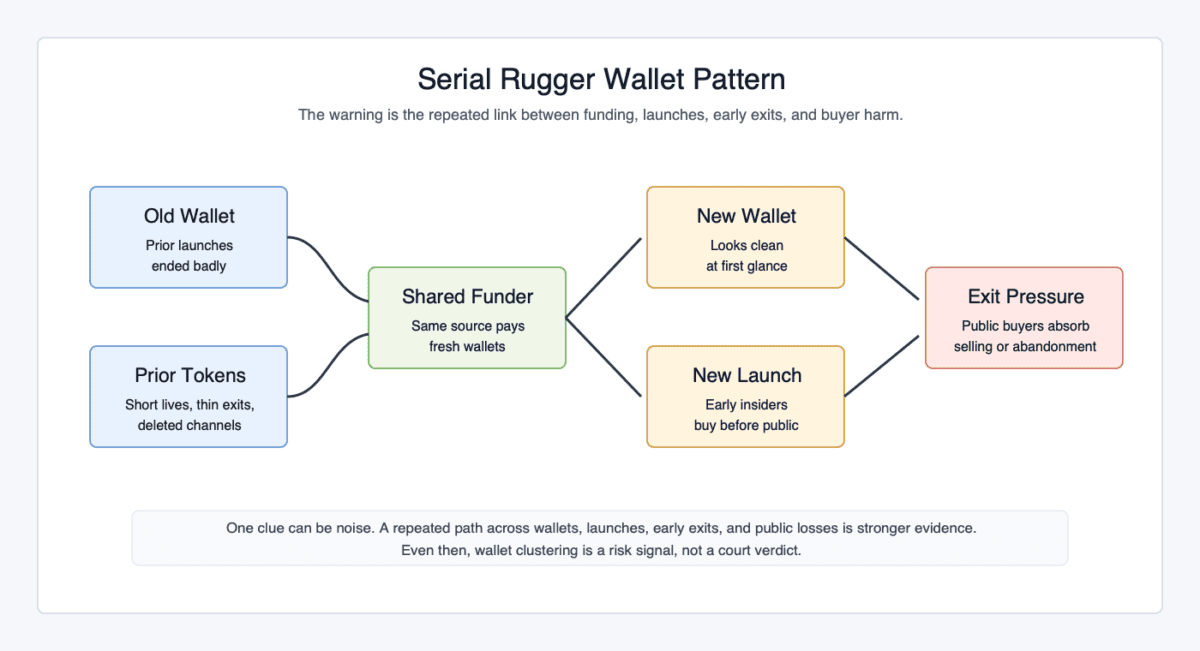
Wallet clusters are useful, but they are not perfect. Centralized exchange withdrawals can blur ownership. Bridges can hide the earlier path. Shared funders may belong to services, friends, or unrelated accounts.
Ask these fresh-wallet questions:
The aim is not to do amateur detective cosplay. It is to avoid mistaking a clean address for a clean history.
Serial rugger risk is common in Pump.fun and meme-coin talk because launch friction is low. A token can appear quickly, get attention quickly, and fail quickly. Speed is the feature and the trap.
The old rug-pull picture was often simple: someone pulled liquidity and the pool broke. Modern meme-coin extraction can look different.
Watch for patterns that make a launch feel disposable:
That is why trenches in crypto language shows up around serial rugger claims. Traders in fast meme-token markets watch deployer behavior, early buyers, social pressure, and wallet history in minutes, not weeks. Pump.fun itself is context here, not a recommendation.
This is also where pvp crypto markets language becomes useful. In a fast launch, someone often needs to be late. Serial rugger risk asks whether the same actor keeps arranging that role for everyone else.
Before buying from a repeat deployer, check whether the new token is really new or just the next wrapper around an old pattern. The goal is risk screening, not a green light.
Start with deployer history. Look at prior tokens, launch timing, survival, liquidity, holder distribution, and whether creator wallets sold early. Then compare the public story with on-chain behavior. A project promising fair launch energy should not have a neat circle of early wallets buying before public attention.
Use this short pre-buy screen:
That last point is where full port risk belongs. Fresh launches with unclear histories do not deserve your whole stack. If the only answer is “but it could run,” the risk case is already doing push-ups.
The safest answer is often no trade. Missing one run is cheaper than becoming the clean exit on a deployer’s sixth attempt.
Some serial rugger signals are useful warnings without being enough evidence alone. A new wallet, anonymous team, low liquidity, or sharp price crash can raise risk, but none proves repeat rugging by itself.
An anon dev risk needs context. Anonymous builders can ship real products, and public teams can still behave badly. The same goes for what doxxed means: public identity can improve accountability, but it cannot erase token-control risk.
Be careful with these clues:
Several aligned clues carry more weight. One dramatic clue mostly says slow down, take screenshots, and stop letting a Telegram argument price your risk.
If you already bought a token from a suspected serial rugger, focus on evidence, wallet safety, and avoiding a second hit. Panic usually creates worse decisions than the first trade did.
Save the contract address, deployer address, transaction hashes, wallet links, public claims, screenshots, and failed sell attempts. If the token used approvals, revoke permissions through a trusted wallet tool before clicking any “support” link shared by strangers. If you are now a bagholder in crypto, the label is less useful than the next action.
This is the action order:
Recovery scams target people right after losses. The FTC warns that anyone demanding a fee to recover lost money is a major red flag. That warning fits crypto losses painfully well.
Serial rugger sits inside a wider risk vocabulary. The point is not to memorize slang. It is to use the right word before you accuse, buy, sell, or warn someone else.
Use these nearby terms only when they help the next decision:
Use these links when you need a quick map from slang to operational checks: methods, market outcome, and ownership context.
Serial rugger means a crypto actor, deployer, team, or linked wallet group repeatedly associated with token launches that collapse after insiders extract value.
No. A rug puller may be accused after one harmful launch, while a serial rugger accusation depends on repeated behavior across multiple launches or linked wallets.
Look for repeated launches, shared funding sources, similar contracts, early insider selling, deleted socials, short token lifespans, and recurring buyer harm.
Yes, but a new wallet alone does not prove it. Check the first funder, sibling wallets, early buyers, and whether prior failed launches connect to the same cluster.
No. Some meme coins fail because demand disappears, liquidity is thin, or the idea was weak. A serial rugger claim needs stronger repeat-pattern evidence.
The slang label is not a legal verdict. Specific conduct may raise fraud, manipulation, or consumer-protection issues, but that depends on facts and jurisdiction.